Ancient temples, neon cities and bullet trains
Everything travelers usually ask before a trip to Japan. Can't find your answer? We're a message away.
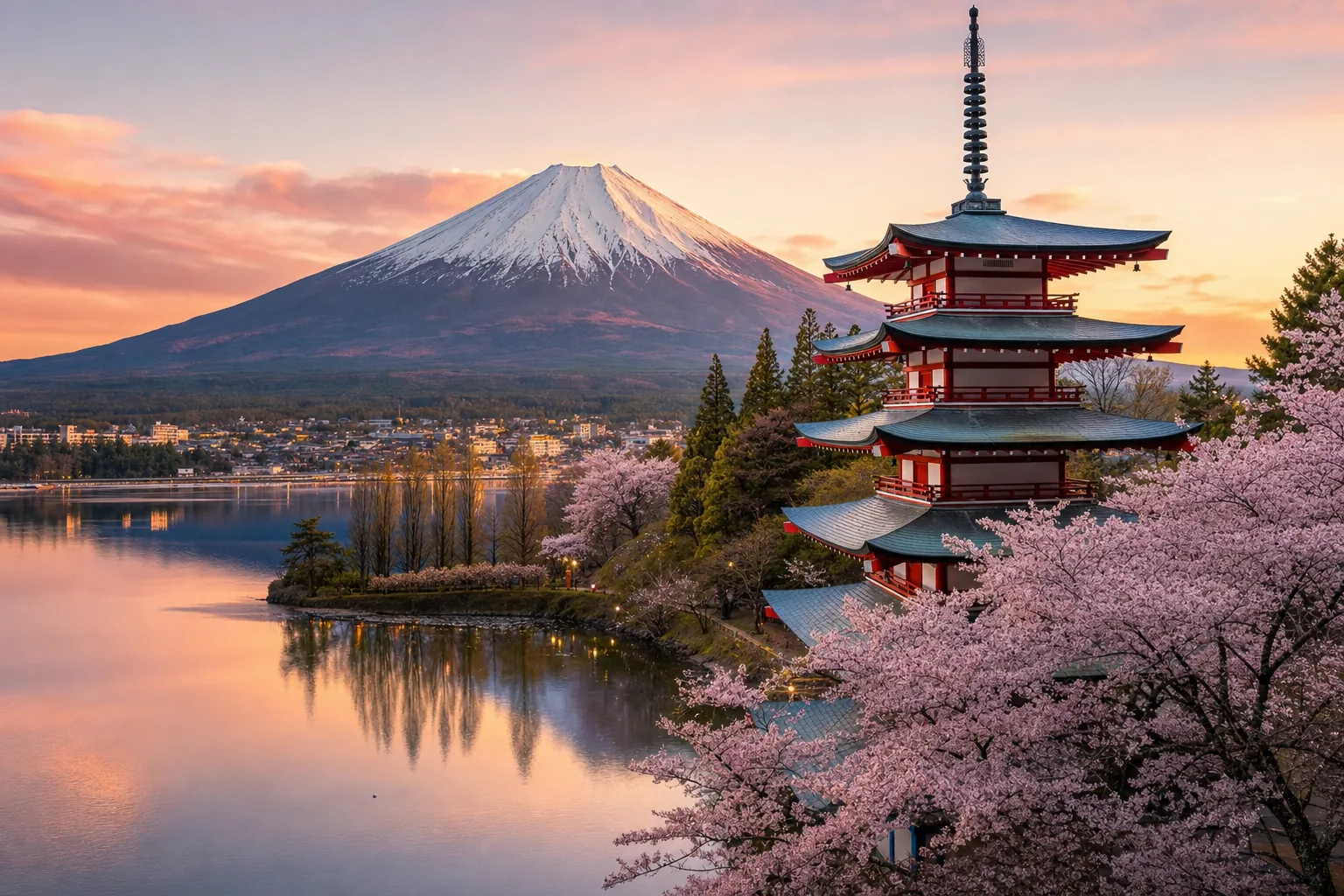
The two most celebrated windows are late March to April for the cherry blossom and October to early December for the autumn foliage, both bringing mild days and beautiful scenery. These are also the busiest periods, so plan well ahead. Winter suits snow and hot springs, while summer is warm and humid but good for Hokkaido and the mountains.
Japan has reciprocal visa-exemption arrangements with many countries, allowing visa-free short stays, generally up to 90 days for most European, North American, Gulf and Australasian passport holders, though some nationalities are limited to shorter stays. A valid passport is required and certain passports must be ICAO-compliant. Always confirm the current rules for your nationality with the official Japanese authorities before traveling.
Around 9 to 12 days allows a classic loop taking in Tokyo, Mount Fuji, Kyoto and Nara, with time to add Hiroshima and Miyajima or the samurai city of Kanazawa. A first trip focused on Tokyo and Kyoto works well in about a week.
Japan is widely regarded as one of the safest countries to visit, with very low crime, spotless public transport and helpful locals. The main things to prepare for are natural events such as earthquakes and typhoons, for which the country is exceptionally well organized.
Pack comfortable walking shoes that are easy to slip off, as you will remove them at temples, ryokan inns and some restaurants. Bring layers suited to the season, modest clothing for shrines and temples, and a small towel and cash, as some smaller establishments are cash-preferred.
Riding the Shinkansen bullet train between Tokyo and Kyoto, then walking through the thousands of vermilion torii gates at Fushimi Inari, captures Japan's blend of the ultra-modern and the deeply traditional in a single day.
Beyond sushi and sashimi, try regional ramen, tempura, okonomiyaki savoury pancakes, a multi-course kaiseki dinner and matcha green tea with wagashi sweets. Each city has its own specialities well worth seeking out.
Yes; safe streets, superb trains, themed attractions and a fascination with everything from bullet trains to robots make Japan very family-friendly. Itineraries can balance temples and gardens with interactive museums and hands-on experiences to keep younger travelers engaged.
Our team is happy to help you plan every detail.